Napoleon, Ohio
Growing Up on the Maumee
A backyard that ran down to the river, a swim across it, a winter afternoon when the ice gave way, and a week on Girty’s Island, near the farms where Howard and Cloyce grew up.
Larry grew up on West Maumee Avenue in Napoleon, Ohio, on the north bank of the Maumee River, upstream of the bridge that carries State Route 108 across the river into town. The family’s backyard ran all the way down to the water. From street level, the house sat on a hillside, and the ground fell away about a story, from the first floor down to the basement. Below the house, set back fifteen or twenty feet, a second hill, the river’s old bank, dropped another ten to fifteen feet to a wide, flat stretch of bottomland about a hundred feet across. At the far side of the flat, the present riverbank fell another ten to fifteen feet to the water.
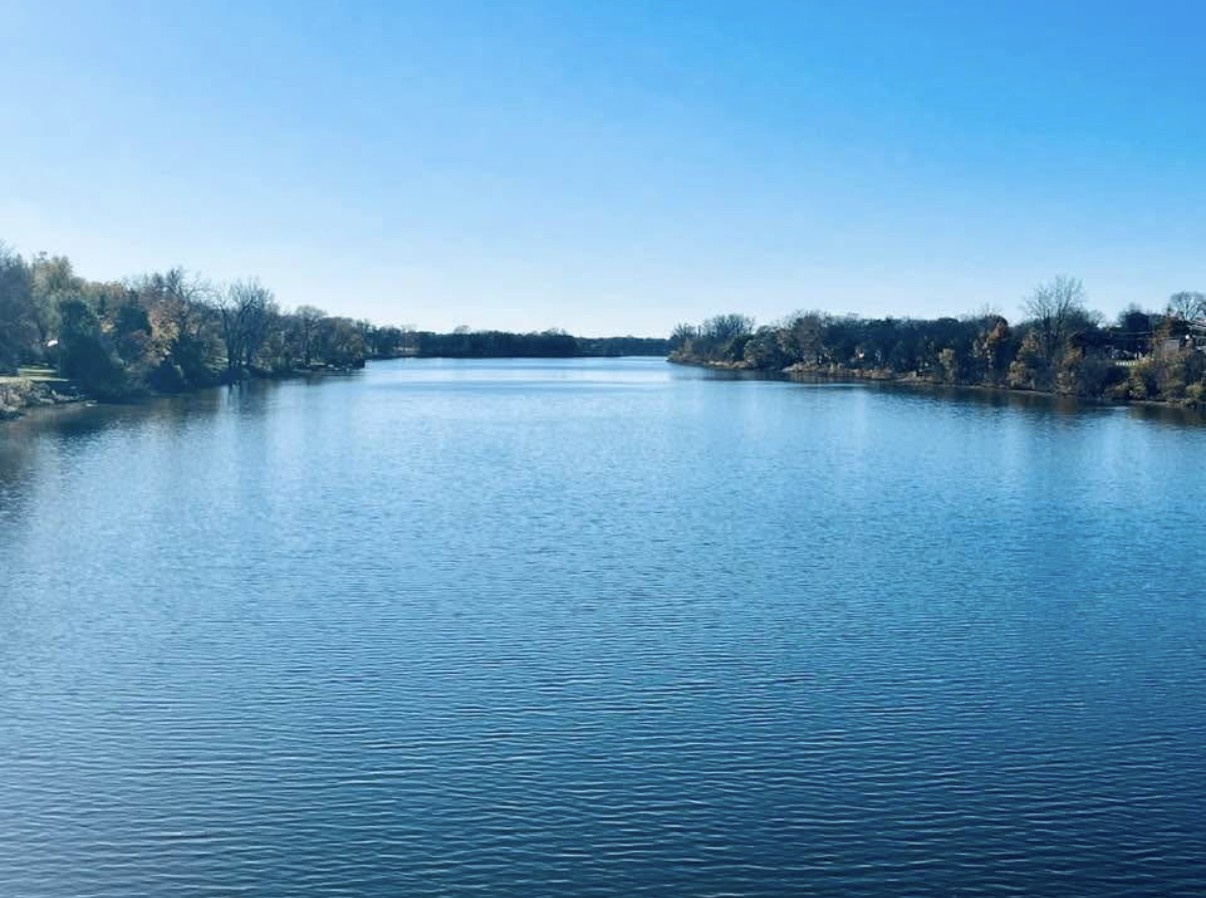
How wide is the river?
Through Napoleon the Maumee is broad and slow, more like a long, narrow lake than a river, because the dam downstream at Grand Rapids backs the water up behind it. Measured on a satellite map, straight across from the old backyard, the river is about 220 meters, or roughly 720 feet, from bank to bank. The modern bridge just downstream, the Henry County Veterans Bridge, opened in 2005, is 221 meters long, so it spans little more than the water itself.
Crossing the river
As a boy, Larry swam across it.
In winter the river froze over, and Larry and his sister Becky walked across it on the ice. They could not cross straight from the house. A power plant on the river discharged warm water that kept the ice from forming below it, so the two of them walked southwest along the river, upstream of the plant, to where the ice was solid, and crossed there.
The ice did not always hold. One winter day Larry was out on the river with his friend Lyle when it broke under him. He threw his arms out across the ice on either side, which kept him from going under. Rather than go home soaking wet, the two boys built a fire and dried his clothes before either of them went home.
When the ice went out
In early spring, the ice went out with a vengeance. Chunks fifteen inches thick or more broke loose, floated up and ground against each other, loud and menacing. Carried along on the rising river, the ice mowed down the cottonwood trees that lined the bank.
The river rose and filled the backyard, sometimes coming within a few feet of the basement level of the house. For weeks the river stayed in the yard, and when it went down it left many fish stranded in the pools behind the Knipps’ house and their neighbors’. Somewhere there are pictures of Larry and his friend Tom Lane canoeing in the backyard.
Upriver to Girty’s Island
The river was the family’s backyard, and Larry had a canoe. He and Lyle paddled all over the Maumee, pretending they were living there two hundred years earlier. Several times they paddled upstream, against the current, to Girty’s Island, about seven miles above Napoleon near the village of Florida.
The island carries the name of the Girty brothers, the most notorious men on the Ohio frontier. Simon Girty was an interpreter for the British who lived among the tribes of the Ohio country and fought alongside them against the Americans. He was on the field in August 1794 at the Battle of Fallen Timbers, farther down the Maumee near present-day Toledo, where General Anthony “Mad Anthony” Wayne defeated the confederacy of tribes led by the Shawnee chief Blue Jacket and the Miami chief Little Turtle. Little Turtle had urged peace with Wayne, and when the council would not hear it he handed command to Blue Jacket. The 1930 state marker across from the island says it was named for Simon’s brother George Girty, and that it was his hiding place.
The family of Don Collier, who married Larry’s sister Cori, held a lease on the island, and Larry camped there several times. One of those trips was a week of Don’s making: they were to “rough it,” living off the land on fish, roots and berries. Larry did not like it at the time. He has been proud of it ever since.
The river, from Napoleon to Girty’s Island
The Maumee ties more of the family together than Larry’s backyard. The country around Girty’s Island is Flatrock Township, in Henry County, and this is where Larry’s father, Howard Knipp, grew up. The Knipp family farm lay just upstream of the tip of the island, on the west side. Howard was raised there, and was confirmed in 1935 at St. John Reformed Church in nearby Holgate. Just upriver from the Knipp farm was the farm of the Fruth family, where Howard’s first cousin Cloyce Fruth, born in Flatrock Township in 1922, grew up.
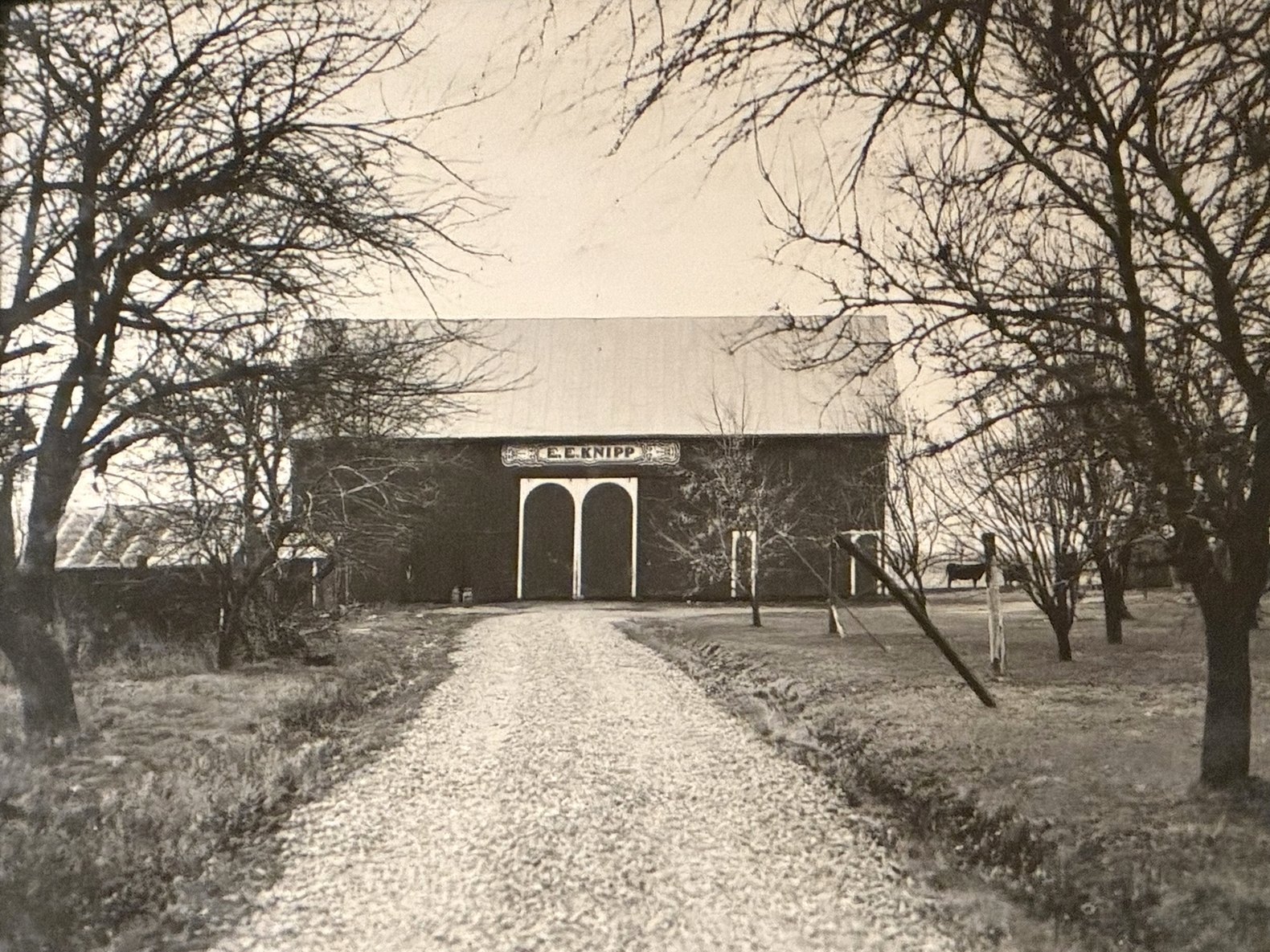
- 1 Napoleon, Ohio The Henry County seat, on the Maumee.
- 2 The Knipp house on West Maumee Avenue Larry’s childhood home, its backyard running down to the river.
- 3 Girty’s Island About seven miles upriver from Napoleon by water; the canoe trips and the week of roughing it.
- 4 The Knipp family farm Where Howard grew up, just past the upstream tip of the island (location approximate).
- 5 The Fruth family farm Cloyce Fruth’s home, just upriver from the Knipp farm (location approximate).